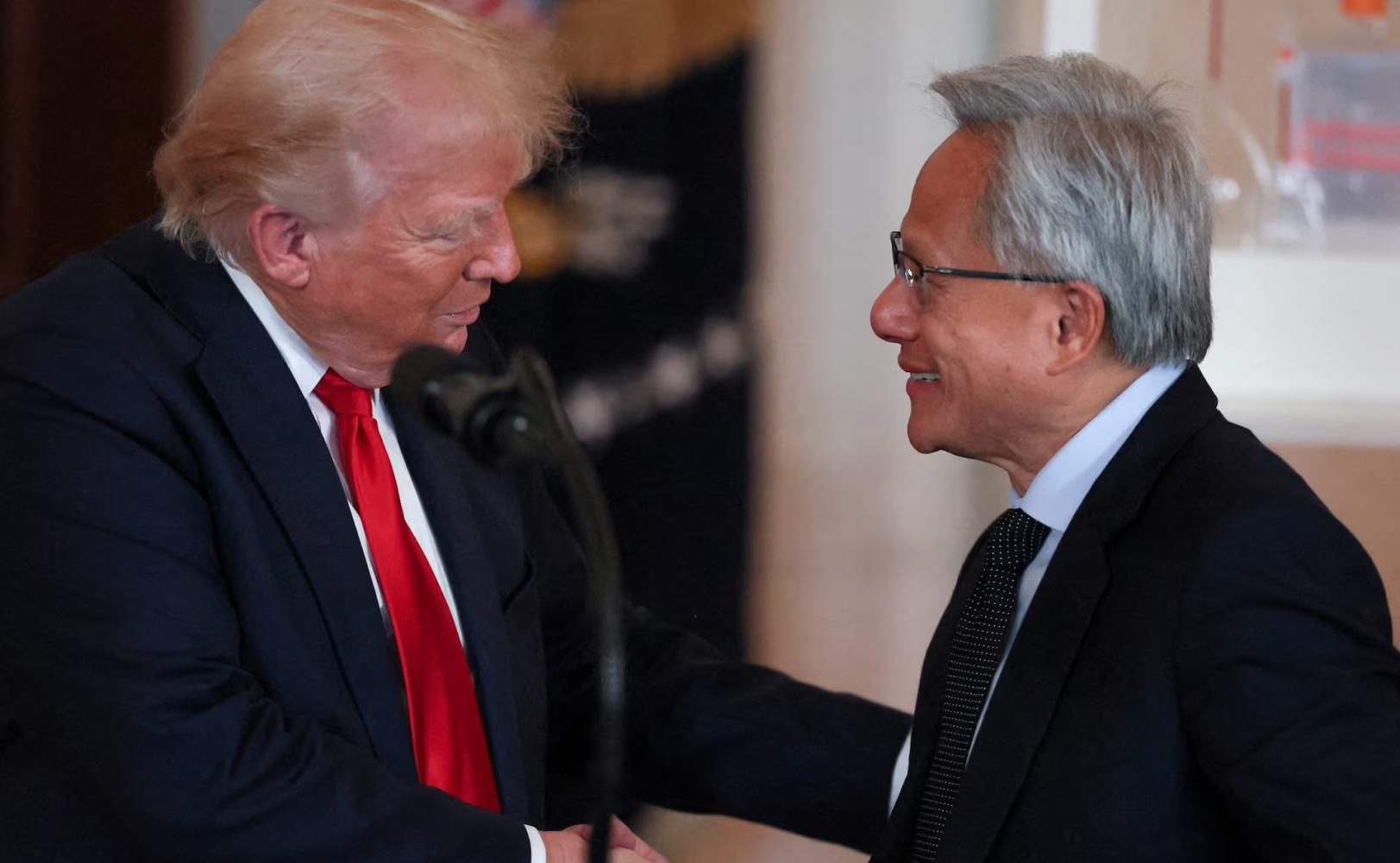
Nvidia CEO Jensen Huang has joined President Donald Trump on his visit to Beijing, creating new optimism in China that the trip could help unlock Nvidia’s long-delayed attempt to sell its powerful H200 AI chips to local buyers.
Huang was not originally included in the first list of U.S. business leaders expected to travel with Trump. That initial group reportedly included major executives such as Elon Musk and Tim Cook. However, after Trump noticed media coverage suggesting Huang had not been invited, he called the Nvidia chief directly. Shortly after, Huang was seen boarding Air Force One in Alaska as part of the delegation heading to China.
Nvidia said Huang is attending the summit at Trump’s invitation to support the United States and the administration’s objectives. The White House also said Huang’s schedule had changed, making it possible for him to join the trip.
His last-minute participation has triggered speculation that the long-running issue around H200 chip sales to China could finally move forward. Nvidia’s H200 chips have become a sensitive point in U.S.-China relations, especially as advanced AI technology continues to play a central role in economic competition, national security, and military concerns.
China was once a major market for Nvidia, representing around 13% of the company’s total revenue. For Chinese cloud and server companies, Huang’s presence is being interpreted as a possible sign that both sides may be closer to finding a solution.
People connected to major Chinese cloud and server businesses believe Huang’s participation could help accelerate the approval process and create a more favorable environment for negotiations. However, despite the Trump administration allowing H200 sales to China late last year and granting formal approval in January under certain conditions, no H200 chips have yet been sold to Chinese customers.
The delay appears to be linked to disagreements over the terms of the sales from both the U.S. and Chinese sides. U.S. officials have also suggested that Chinese companies are facing difficulties obtaining approval from their own government to complete purchases.
The possible sale of H200 chips remains controversial in Washington. Critics argue that allowing China to access more advanced Nvidia technology could strengthen Beijing’s AI capabilities and reduce the United States’ technological advantage.
Some policy experts have warned that selling more Nvidia chips to China could leave fewer chips available for American companies and potentially weaken the U.S. lead in artificial intelligence. Supporters of a deal, however, may view the move as a way to maintain Nvidia’s access to an important market while supporting broader diplomatic and commercial discussions between the two countries.
Huang’s presence in Beijing does not guarantee that a deal will be reached, but it has clearly raised expectations. For Nvidia, any progress on H200 sales could reopen a key revenue opportunity in China. For Washington and Beijing, the outcome could also become a signal of whether the two countries are willing to ease some of the pressure around advanced technology trade.